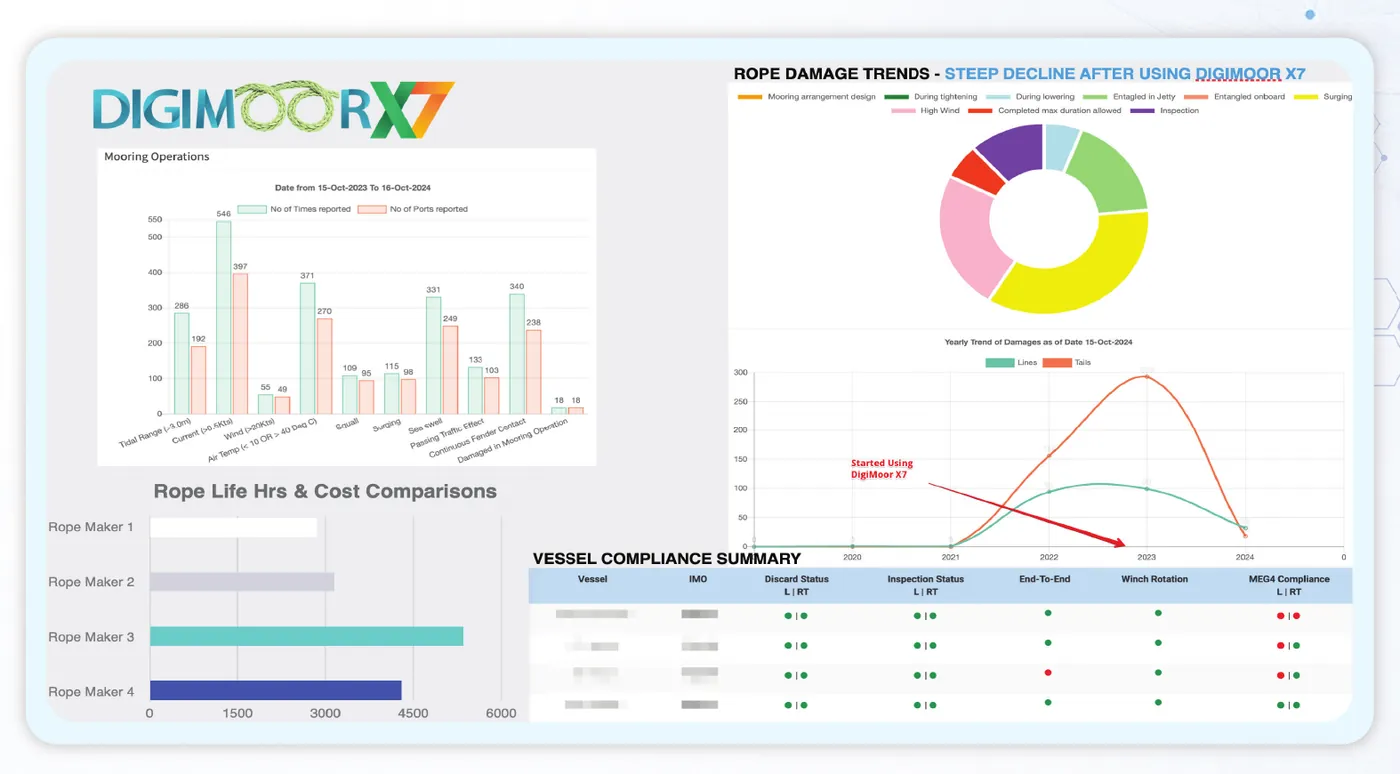
Case Study: How a Fleet Operator Cut Mooring Rope Costs by 9x with DigiMoor X7
From Excel mooring records to SOLAS 2024 compliance, RightShip Mooring Safety badges and best-suited ropes at 9x lower cost.
Read the case studyLatest articles
11 articles · page 1 of 2 Compliance
Where Does Mooring Compliance Start? The Sequence Inversion
Why a MEG4 mooring equipment gap analysis must come before MSMP rewrites how SIRE 2.0, RISQ, TMSA3/ DryBMS and terminals now test engineering, not paper.
 Compliance
The Four-Framework Problem in Mooring Compliance
One mooring operation, four frameworks SIRE 2.0, RISQ 3.2, TMSA3/DryBMS, SOLAS and the terminal and why fragmented evidence breaks at the seams.
.png) Compliance
ComplianceWhen Mooring Lines Part: Lessons from a Recent Container Ship Breakaway at a Major Indian Port
A recent near-miss involving a container ship breaking away at a major Indian port serves as a stark warning that the maritime industry's outdated mooring practices are no longer sufficient. Despite dramatic regulatory escalations over the past eight years - including MEG4, SIRE 2.0, and mandatory 2024 SOLAS amendments - most fleets still rely on fragmented, manual systems like paper plans and Excel spreadsheets. This dangerous disconnect leaves vessels vulnerable to compounding failures, resulting in severe incidents that experts estimate are 80% preventable. To close these safety gaps and meet modern compliance standards, ship managers must abandon reactive habits and adopt a proactive, data-driven approach that continuously analyzes, mitigates, and digitally monitors mooring systems.
.png) Compliance
ComplianceSIRE 2.0 & Enclosed Space Entry: What Operators Must Know
MSC 581(110) and SIRE 2.0 raise the bar on enclosed space entry permit-to-work, continuous monitoring, rescue readiness, and the digital evidence inspectors demand.
 Technology
Still Managing Mooring with Spreadsheets?
Mooring is one of the most hazardous operations on board ships, yet many fleets still manage mooring equipment and inspections through spreadsheets. While these systems appear organized, they often create blind spots in safety oversight, such as inconsistent running-hour tracking, unmonitored brake test trends, and fragmented inspection records. Industry data highlights the risk, with over 11,000 mooring-related findings reported by RightShip between 2022–2025 and hundreds of injuries linked to mooring incidents. Modern regulations like MEG4 and SOLAS require structured oversight and clear evidence of control, not just documentation. DigiMoor X7 addresses this gap by replacing manual spreadsheets with a centralized digital governance system that tracks mooring line lifecycle, inspections, brake tests, and retirement criteria across the fleet. By turning operational data into enforceable safety controls, DigiMoor X7 helps fleets improve safety, audit readiness, and operational transparency.
.png) Compliance
ComplianceWhy Mooring Compliance Remains a Critical Challenge for Fleet and Marine Managers
Mooring operations remain one of the highest-risk activities in shipping, with frequent injuries and fatalities caused by snap-back incidents, equipment failure, and improper winch settings. To address these risks, OCIMF introduced the Mooring Equipment Guidelines (MEG4), which treat mooring as an integrated load-bearing system and emphasize proper load limits, system alignment, and vessel-specific management plans. However, inspection data shows persistent implementation gaps. Between 2022 and 2025, RightShip recorded over 11,000 mooring-related findings, highlighting common issues such as incorrect winch brake settings, poor mooring line management, weak snap-back zone awareness, mixed line types, and insufficient crew knowledge. These shortcomings create significant safety, compliance, and financial risks for fleets, making proper MEG4 implementation a key indicator of operational maturity and safety leadership.
 Compliance
SIRE 2.0 Execution Gaps: Technical Insights Every Fleet Manager Must Address
The shift from SIRE VIQ7 to SIRE 2.0 marks a major change in tanker vetting—from predictable checklist inspections to data-driven, risk-based evaluations of real operational performance. Instead of verifying compliance, inspectors now assess how effectively systems, crew behaviour, and data management control operational risks. Early inspection results show that most negative observations stem from execution gaps between documented procedures, submitted data, and actual onboard practices. Success under SIRE 2.0 now depends on risk-based readiness, strong data governance, effective crew competence, and better coordination between ship and shore operations, rather than simple checklist preparation.
.jpg) Audits
AuditsAudit Intelligence Insights: Why Documented Controls Fail Under Real Audits
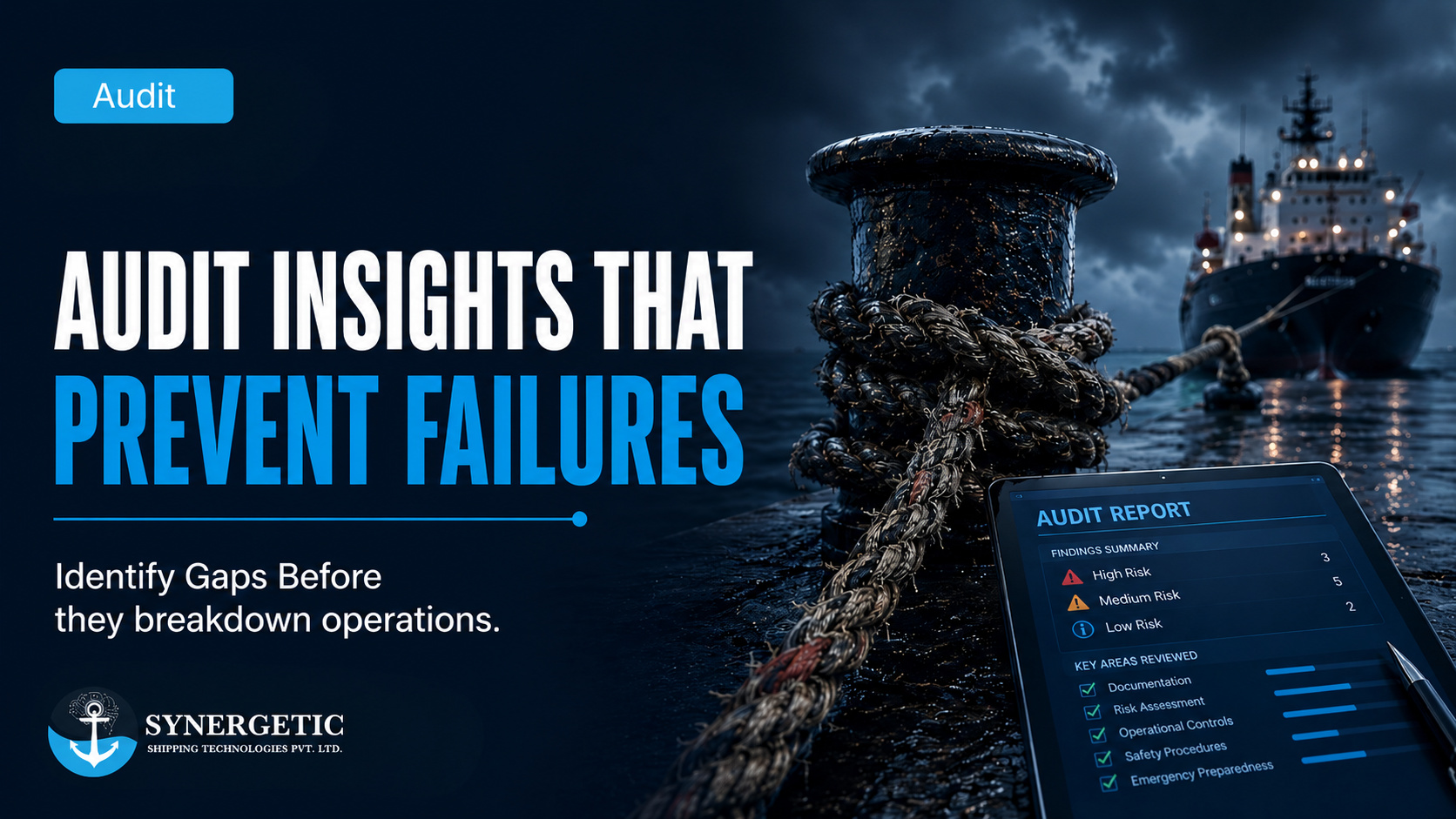
Many shipping companies have well-documented Safety Management Systems (SMS) and approved procedures, yet external audits such as SIRE 2.0, ISM audits, and RightShip inspections continue to highlight recurring deficiencies. This occurs because modern audits evaluate how effectively controls manage real operational risks, not just whether procedures exist on paper. Failures often arise when procedures become outdated, controls degrade between audit cycles, training focuses on compliance rather than risk judgment, and ownership between ship and shore is unclear. As a result, auditors rely on operational evidence, crew understanding, and real task execution to assess effectiveness. In today’s audit environment, control performance and operational behaviour—not documentation—determine true compliance. Common failures arise when procedures remain static while operations evolve, when controls degrade between audit cycles, and when documented processes lack real operational evidence. As a result, auditors increasingly rely on evidence, crew interviews, and operational observations to determine whether controls genuinely manage risk rather than simply exist on paper.
 Safety
Audit Readiness Under Scrutiny: Where Most Safety Management Systems Break Down
The ISM Code requires all SOLAS vessels to implement a Safety Management System (SMS) to ensure hazard identification, risk management, and regulatory compliance. However, global inspection data shows persistent weaknesses in SMS implementation. In 2024, ISM-related deficiencies accounted for 27.57% of detainable findings, and worldwide inspections recorded over 150,000 deficiencies and more than 3,000 vessel detentions, indicating systemic challenges across the industry. These failures often stem from gaps between documented procedures and actual onboard practices, poor data and record management, weak corrective action processes, and human-factor issues such as training, workload, and crew familiarity with procedures. As inspections increasingly focus on real operational performance rather than documentation, improving SMS effectiveness, evidence management, and continuous oversight has become critical for maintaining safety, compliance, and commercial credibility. Global inspection data highlights the issue: in 2024, ISM-related deficiencies accounted for 27.57% of detainable findings, with more than 150,000 deficiencies and over 3,000 vessel detentions worldwide. Increasingly, inspections focus not on whether an SMS exists, but whether it functions effectively in real operations, exposing weaknesses such as poor evidence of compliance and fragmented record management.
Facing a challenge with your SMS, Processes, Inspection or TMSA?
Talk to a Master Mariner about Compliance, Data Trends & Patterns, mooring, SIRE 2.0, RISQ, TMSA 3 or your SMS. No sales script.