PMS X7: Planned Maintenance System for Ships
A Class approved planned maintenance system built on modern architecture and interlinked to a centralised library of equipment, jobs and spares. PMS X7 makes job execution, defect reporting and spares control simple for the crew, and keeps your fleet ready for SIRE 2.0, RightShip RISQ 3.2, TMSA 3 and DryBMS.
- ISM Code
- Class surveys
- SIRE 2.0
- RISQ 3.2
- TMSA 3
- DryBMS
- PSC & Flag
- SFI coding
- Class approved
- Integrated with Marine X7 procurement, RA, HSEQ and PTW
- Backed by a database building team
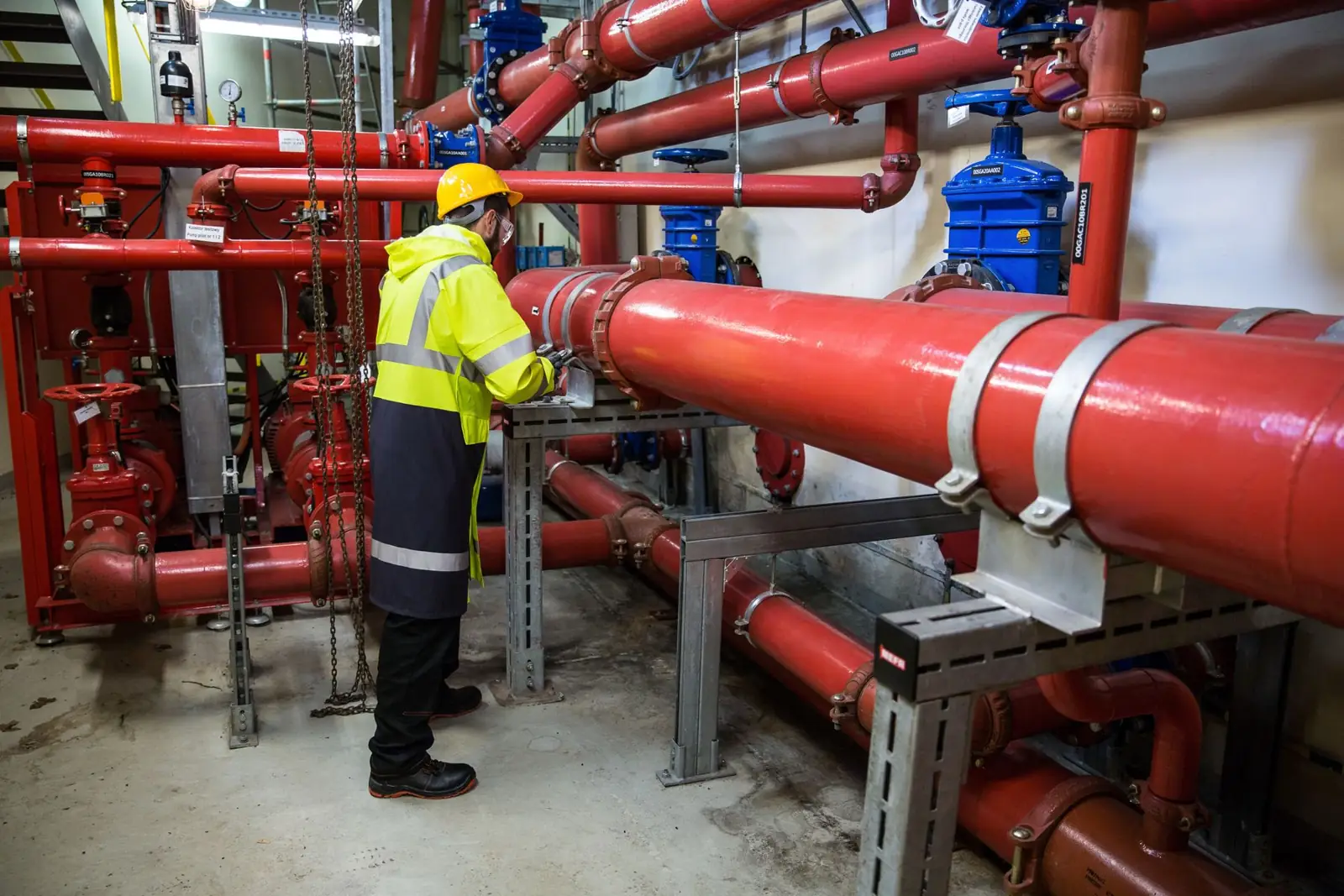
Maintenance is now inspected as evidence, not as a promise
The ISM Code has always required ships to be maintained, but inspectors now test whether the planned maintenance system reflects reality. They compare the PMS with the equipment in front of them, the defects in the log and what the engineers say in interview.
The company must have procedures to ensure the ship is maintained in line with rules and its own requirements, with inspections, non-conformity reporting, corrective action and records, plus specific attention to equipment whose sudden failure could be hazardous.
Class surveys rely on maintenance history, and machinery survey arrangements based on a planned maintenance system depend on the PMS being accurate, up to date and auditable.
Inspectors check critical equipment, overdue jobs and open defects, and observations can be raised against hardware, process or the human element when crew cannot show how maintenance is planned and recorded.
RightShip inspections on dry bulk vessels look at the condition of equipment and the maintenance and defect records behind it.
Many Port State Control deficiencies and detentions trace back to maintenance of fire-fighting, life-saving, emergency and propulsion equipment, and terminals expect critical systems to be demonstrably maintained.
Both frameworks expect a structured maintenance system with critical equipment identified, defects tracked to closure and performance measured across the fleet.
What maintenance management is costing you today
Most fleets have a PMS. The problem is how much work still happens outside it.
Manuals in one place, jobs in another
Engineers still have to find the maker's manual, read it and come back to the job, so steps get skipped and instructions get remembered rather than followed.
Notebooks and memory
Running hours, spares used and what to order in the next requisition end up in notebooks, so the PMS shows one picture and the engine room another.
New crew, new training
Each crew change brings engineers who need time to learn the software before they can report a job correctly.
Messy databases
Inconsistent equipment trees, coding and spares lists across vessels make fleet comparisons and spares procurement unreliable.
Defects that drift
Defects raised onboard are not tied to jobs, spares or the office's follow-up, so they stay open until an inspector finds them.
Repeat inspection findings
Overdue jobs, missing records and unclear critical equipment lists produce the same observations in SIRE 2.0, RISQ and PSC inspections.
Legacy PMS software, spreadsheets and paper manuals — or one system from equipment library to spares order
Maintenance should be planned, executed and evidenced in one place that the crew actually wants to use.
What sets PMS X7 apart for your fleet
PMS X7 satisfies Class requirements and is liked by third-party inspectors and auditors, yet it is simple enough for a newly joined engineer to use. It is super-intelligent in how equipment, jobs and spares are managed.
Class approved
PMS X7 is Class approved, with real-time monitoring of maintenance status across the fleet.
Built for the engine room
An intuitive interface for job execution and a clear view of the maker's manual while reviewing a job reduce training time for new crew.
Your database, built for you
A large in-house team handles database migration and building, using a central library for SFI coding and equipment.
Connected to the rest of Marine X7
Integrated with procurement, risk assessment, HSEQ, defects and permit to work, so one job can trigger the requisition, the risk assessment and the permit.
- Key features
- Class approved with real-time monitoring
- Highly intuitive user interface for easy job order execution
- Clear view of the maker's manual while reviewing a job
- Central library for SFI coding and equipment
- Covers equipment, jobs, spares and counters
- Defect reporting and monitoring system
- Smart inventory management and procurement through PMS
- Backed by a large team for database migration and database building
- Condition-based monitoring
- Integrated with other modules including procurement, risk assessment, HSEQ, defects and permit to work
- Build-your-own analytics for each user and assigned fleets, with artificial intelligence
- Compliant with SIRE 2.0, RightShip RISQ 3.2, TMSA 3 and DryBMS requirements
- Interlinked to a centralised library of equipment, jobs and spares
Fewer breakdowns, fewer findings, better spares spend
The safety return from PMS X7 comes from jobs done on time and defects closed before they become failures. The financial return comes from cleaner data, smarter spares control and less time spent on reporting.
Fewer equipment failures
Calendar, counter and condition-based scheduling, with defects tracked to closure, reduces the chance of critical equipment failing at sea or in port.
Fewer repeat inspection findings
Up-to-date jobs, linked defects and an accurate critical equipment list address the maintenance observations that recur in SIRE 2.0, RISQ and PSC inspections.
Smarter spares spend
Inventory linked to jobs and to procurement shows what is really used, so vessels order what they need rather than what they ordered last time.
Intelligent maintenance data, simple screens for the crew
PMS X7 adds intelligence where it helps the office, and keeps the onboard workflow as simple as possible.
Build-your-own analytics with AI
Each user can build analytics for their assigned fleet, such as overdue jobs, defect trends or spares consumption, using artificial intelligence.
Condition-based monitoring
Condition readings sit alongside calendar and running-hour schedules, so maintenance can respond to how equipment is actually performing.
Fleet-wide patterns
A common library and SFI coding make it possible to compare the same equipment across vessels and spot recurring defects.
Designed for ships and seafarers
An intuitive job screen with the maker's manual in view means engineers can report work correctly without long software training.
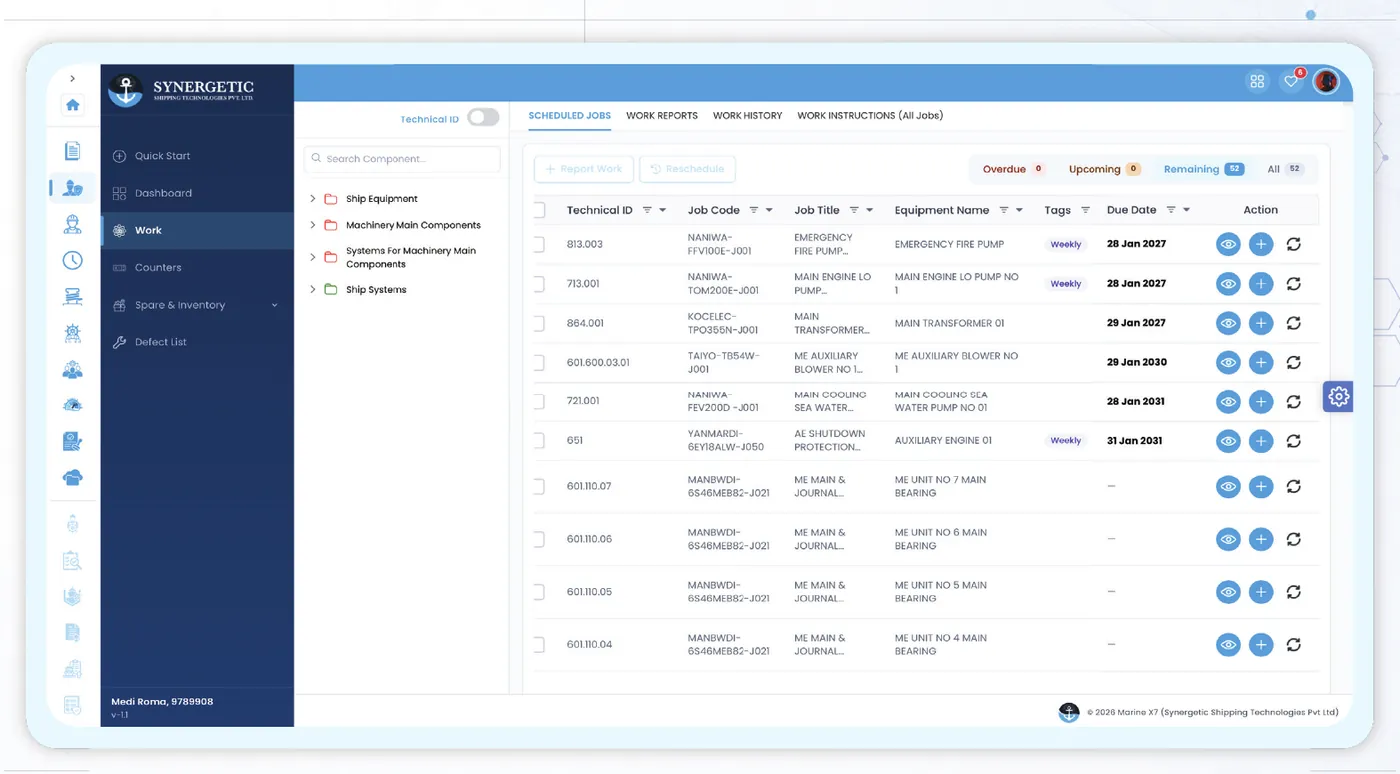
See maintenance status for every vessel in real time
Scheduled jobs, work reports, history and defects are visible to the ship and the office from the same live data.
- Overdue, upcoming and remaining jobs for each vessel
- Equipment tree organised by technical ID and SFI coding
- Work reports, work history and work instructions in one place
- Defect list and spares inventory linked to the jobs
Class approved, built by an ISO certified team
PMS X7 is Class approved. It is part of Marine X7 by Synergetic Shipping Technologies, which is certified to ISO 9001:2015, ISO 27001:2022 and CMMI Level 3 and whose class-approved products also include DigiMoor X7 and Work-Ship.
- PMS X7 is Class approved
- ISO 9001:2015 quality management
- ISO 27001:2022 information security
- CMMI Level 3
- Part of the Marine X7 suite alongside class-approved DigiMoor X7 and Work-Ship
Trusted by 70+ ship owners and managers
2,200+ ships use our software, and 3,100+ ships use our software and services every year, with 100% client retention.
Preferred by the World's Leading Ship Owners and Managers
With 100% client retention since inception, we're trusted by LNG, LPG, Oil, Chemical, Bulk, Container & Specialized Fleets globally.














Learn more about PMS X7
What is PMS X7?
PMS X7 is a Class approved planned maintenance system for ships from Synergetic Shipping Technologies. It covers equipment, jobs, spares and counters, defect reporting, condition-based monitoring and inventory, and is interlinked to a centralised library of equipment, jobs and spares with SFI coding.
Can you build or migrate our existing PMS database?
Yes. PMS X7 is backed by a large team for database migration and database building, using a central library for SFI coding and equipment.
Does PMS X7 integrate with other Marine X7 modules?
Yes. PMS X7 is integrated with other modules including procurement, risk assessment, HSEQ, defects and permit to work. Any Marine X7 module can also run standalone.
Which inspection and audit requirements does PMS X7 support?
PMS X7 satisfies Class requirements and is built to comply with SIRE 2.0, RightShip RISQ 3.2, TMSA 3 and DryBMS requirements for maintenance and defect management.
See PMS X7 with your own vessel's equipment
Book a walkthrough with our team. Share one vessel's current equipment list and we will show you how it looks in PMS X7 and what database building would involve.