
Sailing Audits & SIRE 2.0 Pre-Vetting Inspections: A Master Mariner Sails With Your Ship
Sailing audits and SIRE 2.0 pre-vetting inspections put a Master Mariner on board your ship to see how she is really run. In a sailing audit the auditor sails with the vessel from unmooring to berthing and audits navigation, mooring and cargo work as it happens. In a pre-vetting inspection the auditor inspects her the way a SIRE 2.0, RightShip RISQ 3.2 or AMSA inspector will, before the real inspection. Every observation is risk-categorised and the crew are trained on board.
- Sailing navigation audit
- Mooring audit
- Cargo audit
- SIRE 2.0 pre-vetting
- RightShip RISQ 3.2 & AMSA pre-vetting
- Internal ISM/ISPS audit
- Fleet benchmarking
- 550+ sailing audits and pre-vetting inspections
- Reports line up with OCIMF's Guide to Best Practice for Navigational Assessments and Audits
- Auditors in Europe, the US, India and the Gulf, Asia, Australia and Central & South America
Track record

Vetting now wants to see how the ship is really run
Certificates and completed checklists no longer settle the question. Oil majors, charterers and inspectors want evidence that bridge, mooring and cargo teams follow the procedures when the pressure is on, and that the office checks this for itself.
Inspectors observe tasks and question the crew, then compare what people do and say with what the procedures require.
SIRE 2.0 asks about navigational assessments, and OCIMF's Guide to Best Practice for Navigational Assessments and Audits sets out what a good one covers and records.
Operators are expected to verify shipboard practice through regular audits by competent people and to act on what those audits find.
For bulk carriers, inspection outcomes and operational practice shape the safety picture charterers see before they fix a ship.
Internal audits must show, with objective evidence, that the safety and security systems work on board, not just that documents exist.
An audit done alongside sees records. An auditor who sails sees pilotage, watchkeeping, mooring and cargo work as they really happen.
What a desk-based audit can miss
Most navigation, mooring and cargo incidents begin with habits that never show up in paperwork.
- Practice never observed
A port audit checks logs and checklists but never sees the Master-pilot exchange, the bridge in traffic or the mooring party at work.
- Pre-vetting as a checklist
A walk-round with a checklist misses the observed tasks and crew interviews that SIRE 2.0 inspectors now rely on.
- Repeat observations in vetting
The same navigation and cargo gaps reappear across inspections because nobody has corrected them on board.
- Findings with no fleet picture
Without consolidation, the office cannot see which issues repeat across vessels or which ships need attention first.
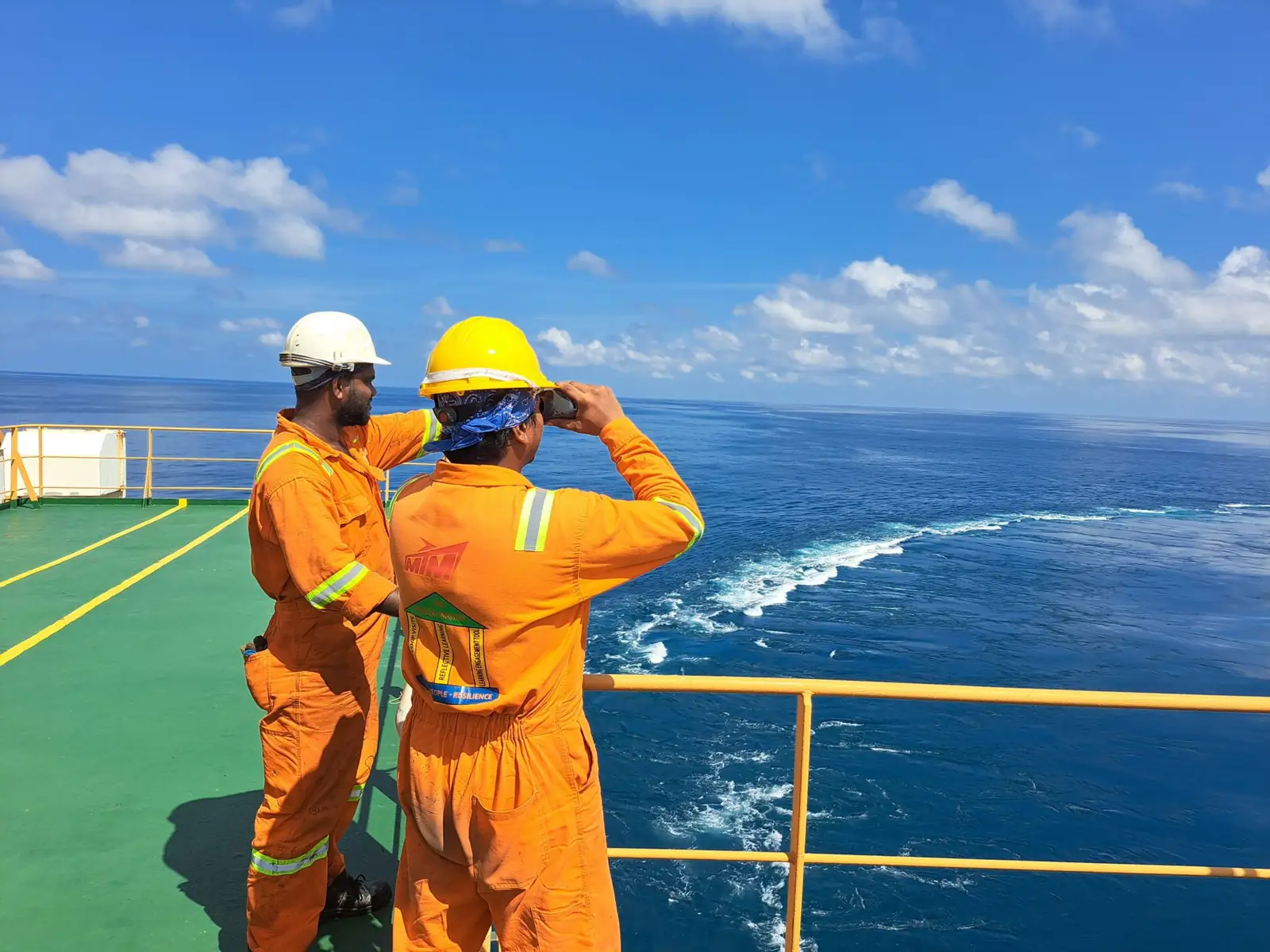
What you get from a sailing audit or pre-vetting inspection
One attendance gives you evidence, crew training and fleet insight, not just a report.
Audit report to recognised best practice
A detailed report that lines up with OCIMF's Guide to Best Practice for Navigational Assessments and Audits, your company's own audit criteria and our experience, covering every phase of the voyage sailed.
Navigation, mooring and cargo audits
Bridge practice, mooring operations and cargo operations audited in one attendance, with internal ISM/ISPS audits and SIRE 2.0 training available in the same visit.
Pre-vetting inspections (SIRE 2.0, RightShip RISQ 3.2, AMSA)
The vessel inspected the way a SIRE 2.0, RightShip RISQ 3.2 or AMSA inspector would, with the crew questioned, gaps closed on board where possible and the rest reported for action.
Risk-categorised observations
Each observation is risk-categorised against your procedures, SIRE 2.0, TMSA 3 and RightShip, so management knows what to fix first.
Best practices and training needs
Good practice is acknowledged as well as gaps, and crew training needs are identified for each vessel.
Worldwide fleet benchmarking
Your vessels compared with each other and with benchmarking data from vessels we have audited.
Six-monthly fleet analysis
High-risk non-conformities and observations, the most repeated observations across your fleet, and industry benchmarking data points in one summary.
Confidential report
Alongside the final audit report, a confidential report for the office is issued after the auditor disembarks.
How a sailing audit works, from planning to final report
We handle the logistics and prepare the auditor for your system, so your superintendents do not have to.
- 1
Pre-boarding
We arrange boarding with your office, the vessel and the agent, share the preparatory instructions, and brief the auditor on your procedures, requirements and SMS.
- 2
Boarding and departure
An opening meeting agrees the audit schedule. The auditor then observes unmooring, outbound pilotage and coastal navigation for situational awareness and compliance.
- 3
At sea
An audit review meeting is held during the open-sea passage, the audit continues, and training and drills are carried out with the crew.
- 4
Arrival
Command and control, situational awareness and compliance are verified through pre-arrival, anchoring, inbound pilotage and berthing.
- 5
Closing and report
A closing meeting is held before the auditor leaves. After disembarkation we submit the final report and the confidential report.
The attendance follows the voyage you choose, and the final report typically follows 3 to 15 days after the auditor disembarks, depending on your company's requirements. Navigation, mooring, cargo and internal ISM/ISPS audits, pre-vetting inspections and SIRE 2.0 training can be combined in one attendance. For navigation audits without boarding, see our remote VDR audit.
Why fleets choose Synergetic for sailing audits and pre-vetting
Our model is planned so that the work, and the headaches, stay with our team.
Master Mariners who have audited widely
Our auditors are Master Mariners, each with experience auditing 50+ vessels and a long association with Synergetic.
Auditors where your ships trade
Auditors are available locally in Europe, the US, India and the Gulf, Asia, Australia, and Central & South America, with shore support for embarkation and disembarkation.
We take away the admin
We plan and share the audit calendar, monitor it, follow up with the agents and prepare and submit the report.
Findings become fleet intelligence
Observations are consolidated through Navigate X7 and our six-monthly fleet analysis into trends and focus areas you can act on.
Proven on board, at fleet scale
Training while the auditor is on board
Training and drills during the passage mean gaps are addressed with the crew, not just written up for the office.
Evidence for TMSA 3 and vetting
Risk-categorised findings give you a documented record of how shipboard practice is verified and what was done about it.
A view across the whole fleet
Six-monthly analysis and benchmarking show which observations repeat and how each vessel compares.
Who sailing audits and pre-vetting inspections are for
For marine superintendents, HSEQ and vetting managers, DPAs and fleet managers who need first-hand evidence of practice at sea. Sailing audits suit every merchant ship type. SIRE 2.0 pre-vetting applies to tankers and gas carriers, and RightShip RISQ 3.2 pre-vetting mainly to bulk carriers.
- Oil tankers
- Product tankers
- Chemical tankers
- LNG carriers
- LPG carriers
- Bulk carriers
- Container ships
- Car carriers
- General cargo ships
- Multipurpose ships
Trusted by 70+ ship owners and managers
ISO 9001:2015, ISO 27001:2022 and CMMI Level 3. Our DigiMoor X7 and Work-Ship software are approved by Class and RightShip.
- 3,100+ ships use our software and services every year
- 100% client retention
Preferred by the World's Leading Ship Owners and Managers
With 100% client retention since inception, we're trusted by LNG, LPG, Oil, Chemical, Bulk, Container & Specialized Fleets globally.
























Turn every sailing audit into fleet intelligence
Navigate X7 brings sailing and VDR navigation audits into one place with fleet trends and focus areas, Inspect X7 runs your own onboard audits, and HSEQ X7 tracks corrective actions to closure.



Learn more about sailing audits and pre-vetting inspections
Questions about sailing audits and pre-vetting inspections
Tell us about your fleet and we will answer directly.
Talk to a Master MarinerWhat is a sailing audit?
A sailing audit is an onboard audit in which the auditor sails with the vessel and observes real operations instead of only checking records alongside. Synergetic's Master Mariner auditor follows navigation, mooring, cargo and internal ISM/ISPS practice from unmooring to berthing, then reports risk-categorised observations and trains the crew on board.
What is a SIRE 2.0 pre-vetting inspection?
A SIRE 2.0 pre-vetting inspection is a rehearsal of the real vetting inspection. A Synergetic Master Mariner inspects the tanker or gas carrier the way a SIRE 2.0 inspector would, observes tasks, questions the crew, closes gaps on board where possible and reports what still needs action. We also pre-vet for RightShip RISQ 3.2 and AMSA inspections.
What does a sailing navigation audit cover?
It covers every phase of the voyage: pre-departure, unberthing and outbound pilotage, coastal and open-sea navigation, pre-arrival or anchoring, and inbound pilotage and berthing. At each stage the auditor checks situational awareness, command and control and compliance with your procedures, and runs training and drills with the crew during the passage.
Do your sailing audit reports follow OCIMF's navigational assessment guidance?
Yes. Synergetic's sailing audit reports line up with OCIMF's Guide to Best Practice for Navigational Assessments and Audits. The auditor also works to your company's own audit criteria and draws on our experience of 550+ sailing audits and pre-vetting inspections, so the report reflects recognised practice and your own procedures.
How long does the sailing audit report take?
The final audit report typically follows 3 to 15 days after the auditor disembarks, depending on your company's requirements. The confidential report for the office is issued after disembarkation too. Before leaving, the auditor holds a closing meeting on board, so the Master and crew hear the main observations without waiting for the report.
Can navigation, mooring and cargo audits be done in one visit?
Yes. Navigation, mooring and cargo audits are combined in a single sailing attendance, and internal ISM/ISPS audits and SIRE 2.0 training can be added to the same visit. Because the auditor sails through departure, passage and arrival, mooring and cargo work is seen as it happens, which saves a separate attendance for each audit.
How is a sailing audit different from a remote VDR audit?
A sailing audit puts a Master Mariner on board to observe navigation, mooring and cargo work, interview the crew and run drills. A remote VDR audit reconstructs bridge practice from the vessel's Voyage Data Recorder data without boarding. Synergetic offers both, and many fleets use remote audits across the fleet and sailing audits where a closer look is needed.
What do we receive after a sailing audit?
You receive a final audit report and a separate confidential report after the auditor disembarks. Observations are risk-categorised, good practice is acknowledged and crew training needs are identified. Clients also get worldwide fleet benchmarking and a six-monthly fleet analysis of high-risk and most repeated observations across their vessels.
Who carries out your sailing audits, and where?
Expert Master Mariners carry them out, each with experience auditing 50+ vessels. Auditors are available locally in Europe, the US, India and the Gulf, Asia, Australia, and Central & South America. Our team plans the audit calendar, coordinates boarding with your office, the vessel and the agent, and supports the auditor ashore.
Talk to a Master Mariner about your sailing audit programme
Tell us your fleet, the audits and pre-vetting inspections you need and where your vessels trade. A Master Mariner on our team will propose a plan, with the report, benchmarking and six-monthly fleet analysis.
Let's Enhance Your Maritime Compliance
and Operational Safety
Connect with our experts to explore how Synergetic's powerful digital solutions can elevate your fleet's compliance, streamline inspections, and strengthen operational safety — backed by real-time data insights and seafarer-driven innovation.
Why Maritime Leaders Choose Synergetic:
- Class and RightShip accredited solutions aligned with OCIMF, TMSA, DRYBMS, and Flag requirements

- Smart AI Powered analytics delivering instant compliance insights and audit-ready documentation
- Proven track record across 3,100+ ships every year and multiple compliance frameworks
- Continuous innovation led by seafarers, auditors, and maritime data specialists
For direct enquiries, reach out to [email protected]
We're Ready When You Are – Let's Talk
Please complete the form and our team will get back to you shortly with personalized support.