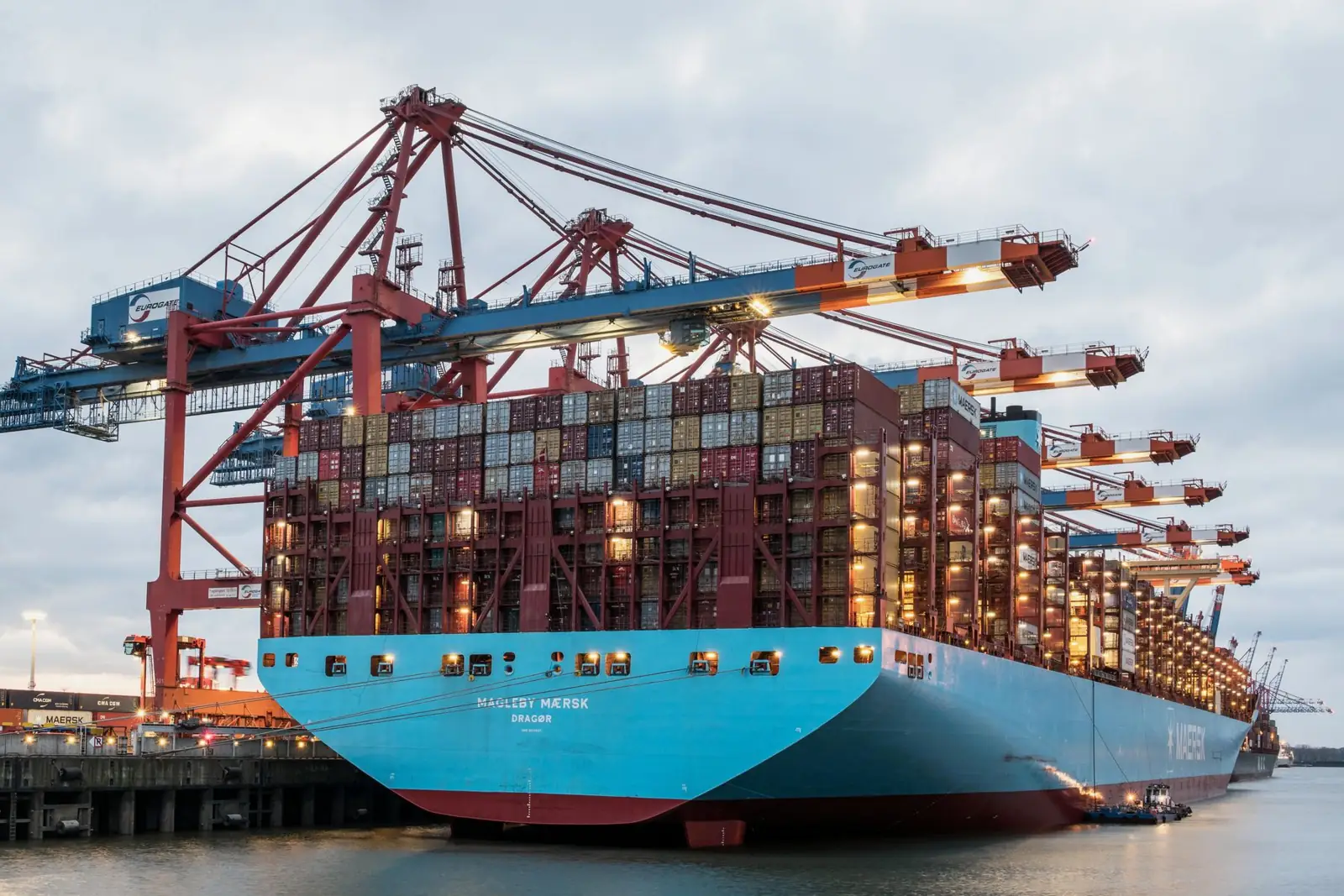
Both our co-founders know these ships first-hand. Capt. Arjun Singh Kalra sailed on oil and chemical tankers and car carriers, rising to command, and Capt. Sachin Sikka has sea experience on car carriers as well as gas carriers and bulk carriers.
What container ship and car carrier operators have to comply with
Port State Control and flag State inspections
For container ships and car carriers, the inspections that count are Port State Control (PSC) and flag State inspections (FSI). PSC officers board in port to check that the ship, her equipment and her crew meet the international conventions. Flag State inspectors check the ship against the conventions and the flag's own requirements. A detention or a long list of deficiencies delays the ship and follows her into the next inspection.
The ISM Code
Your Safety Management System, internal audits, incident investigations and corrective actions are the base that every PSC and flag inspection draws on. Mixed crews working fast port rotations need procedures they can actually find and follow.
Container cargo safety
- Verified Gross Mass (SOLAS VI/2): since 1 July 2016 a packed container may not be loaded without a verified gross mass.
- Cargo Securing Manual: required under SOLAS chapters VI and VII and approved by the flag Administration, it governs lashing and stowage on board.
- The CTU Code (IMO, ILO and UNECE) sets out good practice for packing cargo transport units. It is not mandatory, but misdeclared and badly packed boxes are a recognised cause of fires.
- Lost containers: SOLAS chapter V amendments in force from 1 January 2026 require the Master to report containers lost overboard to nearby ships, the nearest coastal State and the flag State, and to report drifting containers sighted at sea.
- Electronic inclinometers: new container ships of 3,000 gross tonnage and above built from 1 January 2026 must carry one, under SOLAS regulation V/19.2.12, to record roll motion.
Fire safety on car carriers
Fires in vehicle decks are the defining risk of a car carrier, and the growing share of electric vehicles has made them a priority at IMO. In March 2026 IMO's Sub-Committee on Ship Systems and Equipment (SSE 12) gave priority to interim guidelines on fire safety measures for pure car and truck carriers. Any SOLAS amendments that follow are expected to enter into force on 1 January 2032 at the earliest. Until then, your own procedures, drills, patrols and crew training are what an inspector will examine.
Mooring with high windage
Container ships and car carriers present a large side area to the wind, so mooring loads at the berth can rise quickly. Since 1 January 2024 SOLAS regulation II-1/3-8 requires all ships to inspect and maintain mooring equipment, including lines, following MSC.1/Circ.1620, and OCIMF's MEG4 sets the engineering reference values for lines, tails, winch brakes and fittings.
Hours of rest on short port rotations
Frequent port calls, lashing supervision and cargo watches compress rest periods. MLC 2006 and STCW limits apply in full, and PSC and flag inspectors compare rest records with port times and log entries.
How Synergetic helps container ship and car carrier operators
Services
- Sailing audits and PSC readiness inspections: a Master Mariner sails with the ship through pilotage, coastal passage and berthing, auditing navigation, mooring and cargo practice as it happens, with internal ISM/ISPS audits in the same visit, and checks the ship for PSC and flag State readiness before the inspector boards.
- Remote VDR and S-VDR analysis: bridge practice in dense traffic and frequent pilotages reconstructed from the ship's own data, without putting an auditor on board.
- MEG4 mooring gap analysis and engineering assessment: your mooring system checked against MEG4 and SOLAS, with residual strength testing, line parting investigations and vessel-specific mooring plans.
- Incident investigation: VDR-backed timelines and root cause analysis after a fire, cargo incident, contact or line parting.
- SMS revamp and shore and onboard training, including mooring safety and the human element.
- Vessel condition and pre-purchase inspection before you buy, sell or charter a ship.
Marine X7 modules that fit container ships and car carriers
- DigiMoor X7: mooring line management for all merchant ship types, with ClassNK type approval and a ports database that shows mooring compatibility before the ship arrives.
- Work-Ship: work and rest hours software approved by ClassNK and IRClass, which flags breaches as they happen during busy port rotations.
- PTW X7 and RA X7: permits and risk assessments built for the ship, the space and the task, including hot work and enclosed spaces.
- Navigate X7: sailing and VDR navigation audits in one place, with AI focus areas across the fleet.
- HSEQ X7 and Inspect X7: PSC, flag and internal findings turned into fleet focus areas, and your own inspections run offline.
- PMS X7: ClassNK approved planned maintenance, with critical equipment such as fire detection and fixed fire-fighting systems clearly flagged.
- Voyage X7: noon, arrival and departure data captured once for performance and emissions reporting.
Each module runs on its own. See the full Marine X7 suite and our approvals and certifications.
Why operators work with us
- 550+ onboard sailing audits and pre-vetting inspections and 2,200+ remote VDR analyses.
- 14+ SMS revamps, gap analyses and simplifications.
- Software used on 2,200+ ships, and our software and services on 3,100+ ships each year.
- 70+ ship owners and managers, with 100% client retention.
Frequently asked questions
Which inspections do container ships and car carriers face?
Mainly Port State Control and flag State inspections. There is no industry vetting scheme for these ships like SIRE 2.0 for tankers, so PSC and flag inspectors are the ones who test the ship and its Safety Management System in practice. Keep certificates, maintenance, drill and hours of rest records ready for both.
What are the new rules on containers lost at sea?
Since 1 January 2026, amended SOLAS chapter V requires the Master of a ship that loses containers to report promptly to nearby ships, the nearest coastal State and the flag State. Ships that sight drifting containers must report them to nearby ships and the nearest coastal State.
Are there new IMO fire rules for car carriers carrying electric vehicles?
Not yet in force. In March 2026 IMO prioritised interim guidelines on fire safety measures for pure car and truck carriers, and any SOLAS amendments are expected no earlier than 1 January 2032. Until then, operators should strengthen their own procedures, patrols, drills and crew training, because that is what inspectors examine.
Why does mooring matter so much on these ships?
Container ships and car carriers have a large side area exposed to wind, so mooring loads can rise sharply when the wind increases at the berth. A ship-specific mooring plan, lines and fittings checked against Ship Design MBL, and a crew trained in snap-back risk all reduce the chance of a breakaway.
Can a sailing audit cover navigation and mooring in one visit?
Yes. Our Master Mariner auditor sails through unmooring, pilotage, passage and berthing, so navigation, mooring and cargo practice can be audited in a single attendance, with internal ISM/ISPS audits added if you need them. The crew is coached on board while the auditor is still there.
Sources
- DNV: IMO Maritime Safety Committee MSC 108 (container loss reporting, SOLAS chapter V)
- IIMS: SOLAS updates announced by IMO, including container reporting
- UK MCA: MGN 712(M) electronic inclinometers for new container ships and bulk carriers
- DNV: IMO Sub-Committee on Ship Systems and Equipment (SSE 12)
- IMO: Safe mooring (SOLAS II-1/3-8 and MSC.1/Circ.1620)