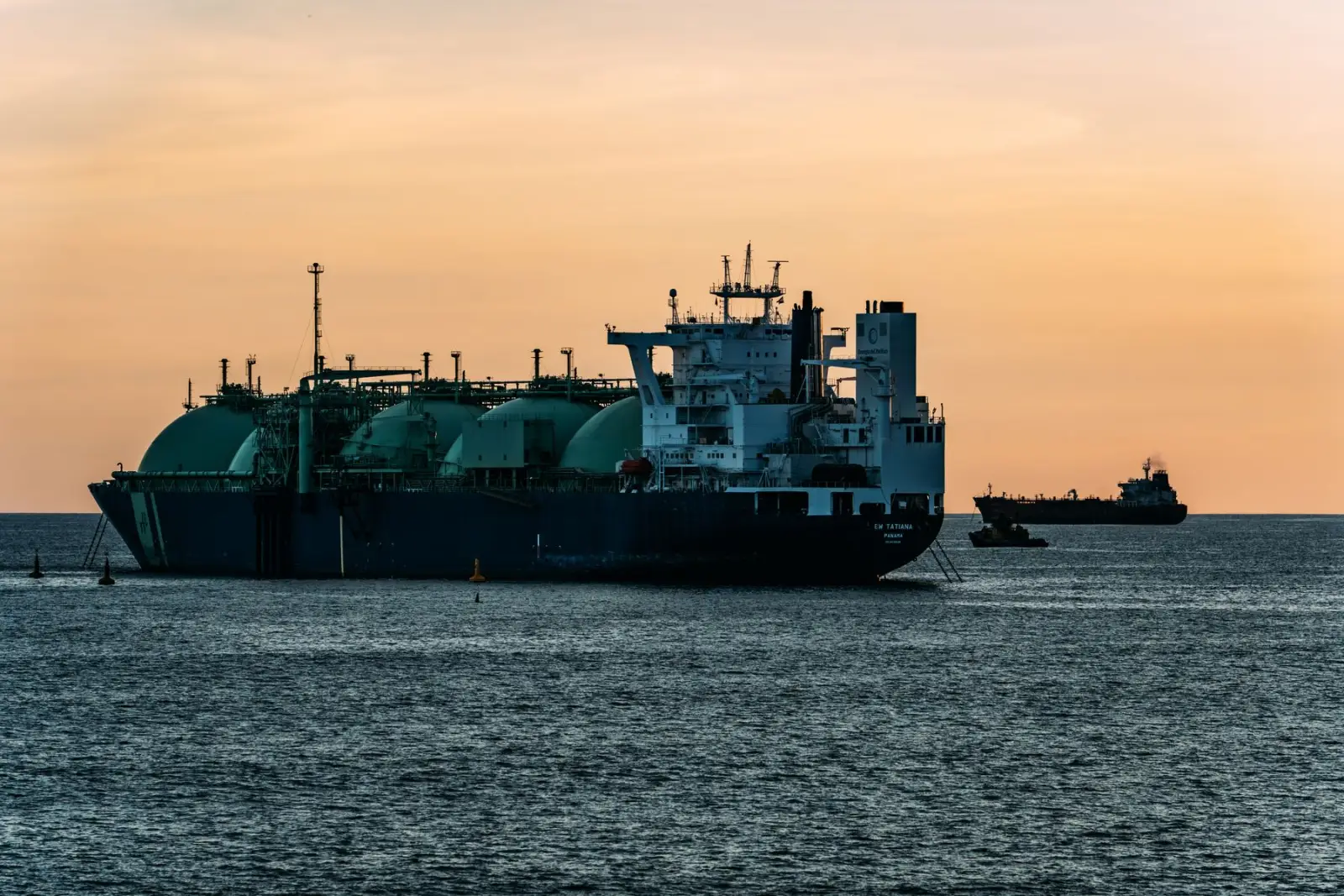
Our team is led by Master Mariners. Co-founder Capt. Sachin Sikka has sea experience on LNG and LPG carriers and served with Petronet LNG, so we know what a cargo watch, a cool-down and a tight terminal window feel like from the deck.
What LNG and LPG carrier operators have to comply with
The IGC Code: the ship as built
The International Code for the Construction and Equipment of Ships Carrying Liquefied Gases in Bulk (IGC Code) has been mandatory under SOLAS chapter VII since 1 July 1986. The revised Code applies to gas carriers whose keels were laid on or after 1 July 2016. Class and flag survey the ship against it. What the Code cannot show is how well the ship is run today, and that is what vetting tests.
SIRE 2.0: the ship as operated
SIRE 2.0 covers oil, chemical and gas tankers, and became the standard OCIMF inspection on 2 September 2024. The inspector observes tasks and questions the crew, comparing what people do and say with what your procedures require. For a gas carrier that means cargo and boil-off management, emergency shutdown testing, gas detection, enclosed space entry and mooring are all judged on demonstrated practice, not on a tidy record. Mooring sits in Section 9 of the question set.
TMSA 3: the office behind the ship
Oil and gas majors use OCIMF's Tanker Management and Self Assessment (TMSA 3) to judge the operator, not just the vessel. Each stage you claim needs objective evidence and KPIs. Mooring has its own element, 6A, covering vessel design, people and the mooring system. Repeated SIRE 2.0 observations on your gas ships will be read against your TMSA submission.
SIGTTO guidance: the ship-shore interface
The Society of International Gas Tanker and Terminal Operators (SIGTTO) publishes the industry's reference guidance for gas carriers and terminals, including the LNG Shipping Suggested Competency Standards (third edition, 2021), Recommendations for Liquefied Gas Carrier Manifolds and Guidance on Gas Carrier and Terminal Gangway Interface. Terminals and charterers often expect operators to show how their training, procedures and ship-shore arrangements reflect SIGTTO recommendations.
CDI for LPG carriers in chemical trades
The Chemical Distribution Institute (CDI) runs an inspection scheme for chemical and LPG tankers, used by chemical companies to vet the ships they charter. Unlike SIRE, a CDI inspection is requested by the ship owner. If your LPG carriers load for chemical shippers, expect to manage CDI and SIRE 2.0 side by side.
Mooring: SOLAS II-1/3-8 and MEG4
Since 1 January 2024, amended SOLAS regulation II-1/3-8 requires every ship to inspect and maintain its mooring equipment, including lines, following IMO's guidelines in MSC.1/Circ.1620. OCIMF's Mooring Equipment Guidelines (MEG4) make Ship Design MBL the reference value for lines, tails, winch brakes and fittings.
Gas carriers carry a hard lesson here. In March 2015 a mooring line on the LNG carrier Zarga parted during berthing at an LNG terminal in the UK and seriously injured an officer. The MAIB investigation (report 13/2017) found the lines were not fit for purpose: the residual strength of the parted line was below its working load limit, and the officer was standing in a snap-back zone that had been considered safe.
Hours of rest through long cargo operations
Gas carrier crews often work through loading, discharge, cool-down and gassing-up in quick succession. MLC 2006 and STCW set the rest limits, and SIRE 2.0 treats hours of rest as a core question, so records that look too perfect attract as much attention as records that show breaches.
Ship-to-ship transfer
When gas cargo moves between ships, the Ship to Ship Transfer Guide for Petroleum, Chemicals and Liquefied Gases applies. CDI, ICS, OCIMF and SIGTTO released its second edition in October 2025, so STS procedures written against the first edition are due for review.
Typical gaps on gas carriers
Published findings on gas carriers keep pointing to the same few areas. They are where a pre-vetting inspection on a gas carrier should look first:
- Fixed gas detection. In US Coast Guard Marine Safety Alert 02-20, Port State Control officers found sensors on LNG carriers reading outside the maker's tolerances, catalytic sensors tested with the wrong span gas, and crews not following their own SMS calibration procedures.
- Emergency shutdown, relief valve settings and water spray. The US Coast Guard's Liquefied Gas Carrier National Center of Expertise has named gas detection, emergency shutdown, maximum allowable relief valve settings (MARVS), deck water spray and electrical issues as the most common deficiencies it finds on gas carriers.
- Mooring lines and snap-back zones. The MAIB's Zarga report found mooring lines that were no longer fit for purpose and a snap-back zone that had wrongly been considered safe.
How Synergetic helps gas carrier operators
Services
- Sailing audits and pre-vetting inspections: a Master Mariner sails with your gas carrier and audits navigation, mooring and cargo practice as it happens, then inspects against SIRE 2.0 before the real inspector does.
- Remote VDR and S-VDR analysis: see how your bridge teams handle pilotage and terminal approaches, without putting an auditor on board.
- TMSA 3 gap assessment: every element tested against objective evidence, then a mock office audit before the oil major's review.
- MEG4 mooring gap analysis and engineering assessment: SDMBL, line design break force, tails, winch brakes and fitting SWL verified, residual strength testing, line parting investigations, mooring plans and TMSA Element 6A reviews.
- SMS revamp: cargo, technical and navigation manuals rewritten as plain, task-based procedures, with each SIRE 2.0 and TMSA 3 requirement traced to the procedure that meets it.
- Incident investigation and shore and onboard training built on your own fleet's evidence.
Marine X7 modules that fit gas carriers
- DigiMoor X7: mooring line management software with ClassNK type approval against SOLAS II-1/3-8, MSC.1/Circ.1620, MEG4, SIRE 2.0 Section 9 and TMSA 3 Element 6A. Its shared ports database shows mooring compatibility before the ship is fixed or arrives, which matters at terminals with their own mooring rules.
- Work-Ship: work and rest hours software approved by ClassNK and IRClass, which alerts ship and shore to non-compliances as they happen during long cargo operations.
- PMS X7: ClassNK approved planned maintenance with critical equipment flagged, so cargo machinery, gas detection and safety systems have a record an inspector can trust.
- PTW X7: permits built for the ship type, the space and the task, which suits gas-dangerous zones and enclosed spaces.
- DMS X7 and HSEQ X7: your SMS mapped to SIRE 2.0 and TMSA 3, and every finding turned into fleet focus areas.
Each module runs on its own, so you can start with the one that fixes today's problem. See the full Marine X7 suite and our approvals and certifications.
Why gas operators work with us
- Master Mariner-led: the people who audit your ship have commanded ships.
- 550+ onboard sailing audits and pre-vetting inspections, and 2,200+ remote VDR analyses.
- 28 SIRE 2.0 and RightShip gap analyses, and 16 TMSA 3 and DryBMS office preparations.
- 70+ ship owners and managers, with 100% client retention.
Frequently asked questions
Does SIRE 2.0 apply to LNG and LPG carriers?
Yes. SIRE 2.0 covers oil, chemical and gas tankers, so LNG and LPG carriers are inspected under it. Questions are selected for the ship's type, equipment and operations, and the inspector observes tasks and questions the crew. Gas carrier operators should prepare crews to demonstrate cargo, mooring and emergency practice, not just show records.
How does SIGTTO guidance affect gas carrier operators?
It sets the benchmark many customers use. SIGTTO publishes the industry's reference guidance for gas carriers and terminals, from competency standards to manifolds and the gangway interface. Many terminals and charterers expect operators to show how their training, procedures and ship-shore arrangements reflect it, so record how you meet each recommendation that applies.
Do LPG carriers need CDI inspections as well as SIRE 2.0?
Often, yes. CDI's scheme covers chemical and LPG tankers and is used by chemical companies to vet the ships they charter. If your LPG carriers serve chemical shippers, plan for both inspections. CDI inspections are requested by the owner, so you can schedule them around your fleet's trading pattern.
What does SOLAS II-1/3-8 mean for an existing gas carrier?
Since 1 January 2024 every ship, new or existing, must inspect and maintain its mooring equipment, including lines, following IMO guidelines in MSC.1/Circ.1620. The design requirements apply to new ships. For an existing gas carrier, that means a ship-specific plan and a traceable history for every line, tail and fitting.
Can we use DigiMoor X7 or Work-Ship without the rest of Marine X7?
Yes. Every Marine X7 module runs standalone and delivers full value on its own, with an offline mode for vessels. Many operators start with DigiMoor X7 for mooring or Work-Ship for hours of rest, then connect other modules such as PMS X7 later, on the same ship-shore system.
Sources
- IMO: International Code for the Construction and Equipment of Ships Carrying Liquefied Gases in Bulk (IGC Code)
- OCIMF: SIRE 2.0 programme
- The Maritime Executive: SIRE 2.0 to go live on September 2nd, 2024
- SIGTTO: publications
- Cefic: Good Practice for Ship Vetting
- MAIB: Failure of mooring line on board LNG carrier Zarga (report 13/2017)
- IMO: Safe mooring (SOLAS II-1/3-8 and MSC.1/Circ.1620)
- DNV: Towing and mooring equipment update, preparation for SOLAS regulation II-1/3-8
- MarineLink: Second edition of the Ship to Ship Transfer Guide (October 2025)
- IIMS: Fixed gas detection systems discrepancies on liquefied gas carriers (USCG Marine Safety Alert 02-20)
- SAFETY4SEA: Top 5 deficiencies on board gas carriers (US Coast Guard Liquefied Gas Carrier National Center of Expertise)