Last week, something happened at one of India's busiest ports that should give every ship manager pause.
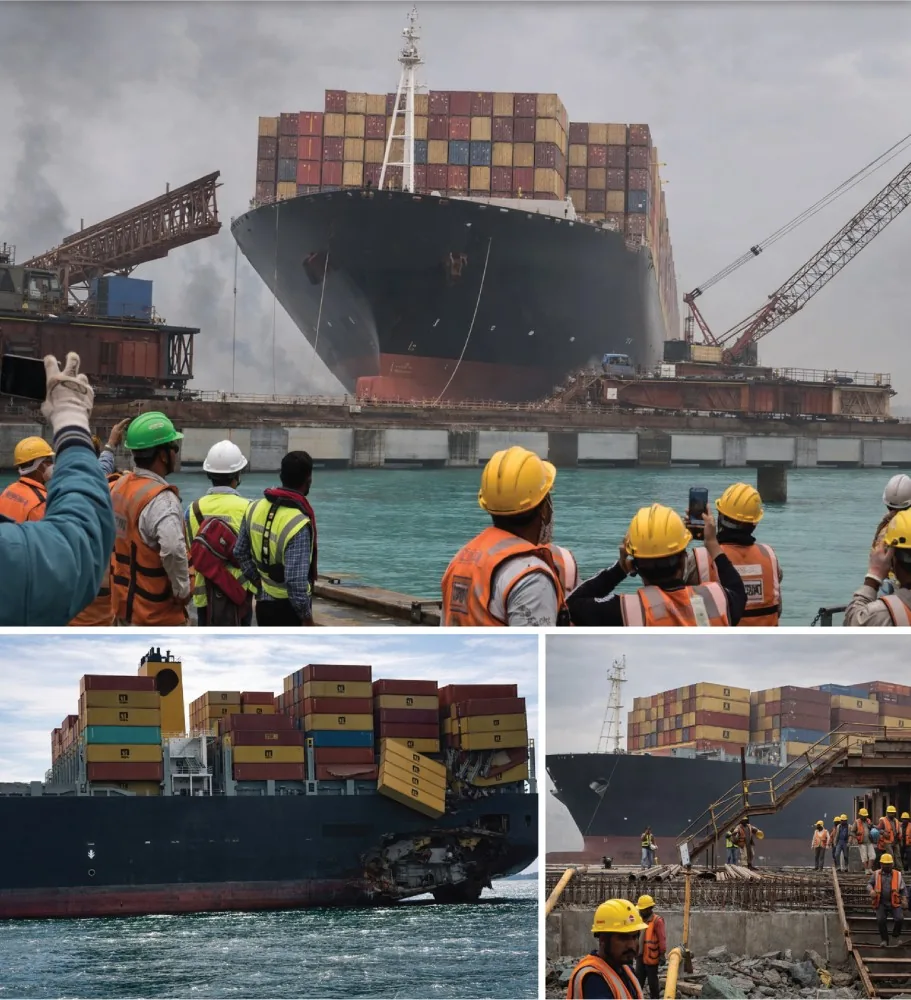
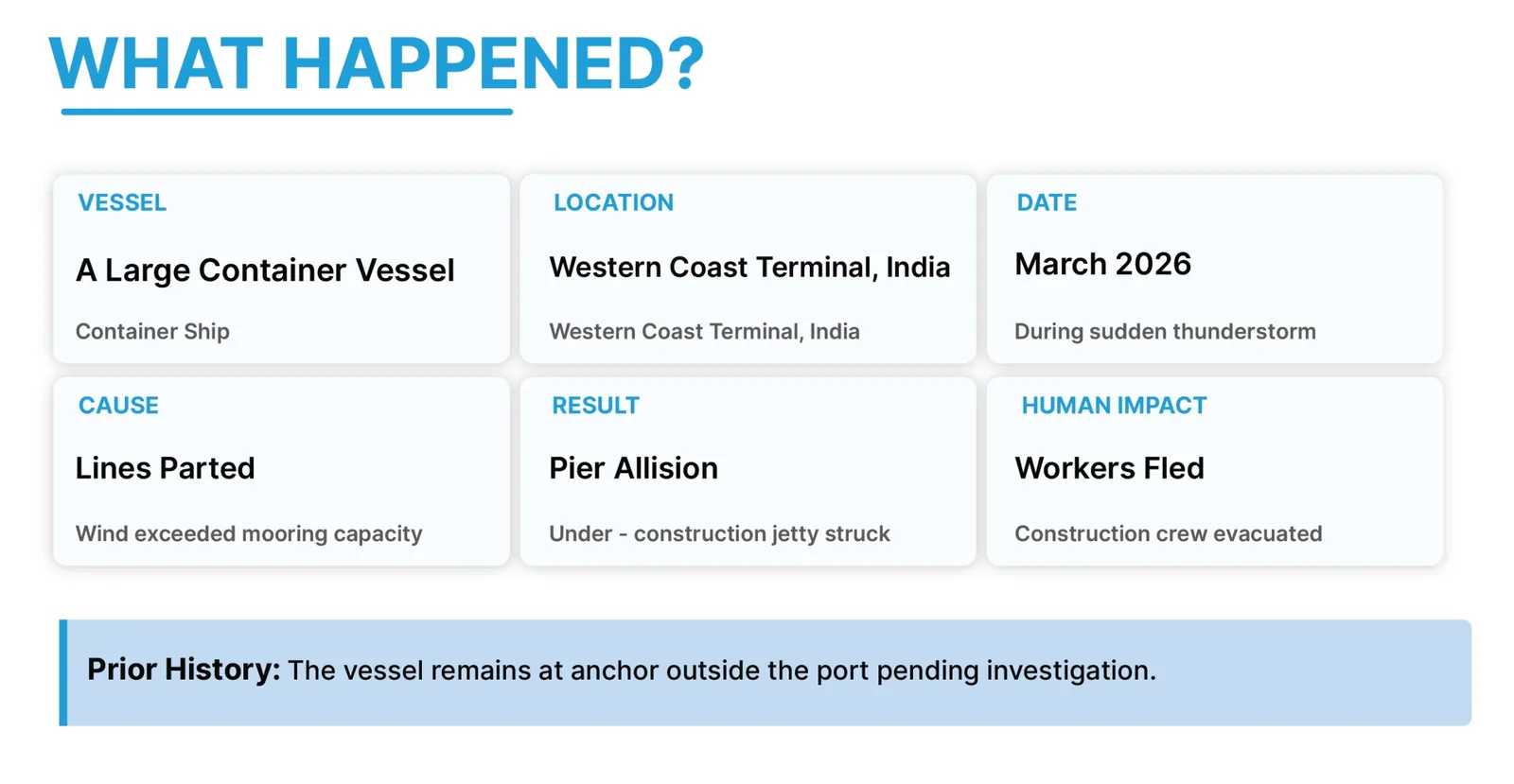
A large container vessel was moored at a major terminal when a sudden, violent thunderstorm swept through the area. Wind speeds spiked. Her mooring lines couldn't take the strain. They parted and the vessel drifted, uncontrolled, across the harbour.
She struck bow-first into a pier that was under active construction.
The bystander footage is hard to watch: construction workers sprinting away from the waterfront as a container ship bears down on them, horn blaring. Thankfully, no one was killed. But this could have gone very differently.
his isn't just a weather story. It's a systems story.
And as someone who has spent years working on mooring compliance across hundreds of vessels, I want to share what I think this incident really tells us about where our industry stands and where we need to go.
THE REGULATORY LANDSCAPE HAS CHANGED. DRAMATICALLY.
If you haven't been tracking what's happened to mooring regulations over the past 8 years, here's the compressed version:
In 2018, OCIMF published MEG4 - a complete overhaul of mooring equipment guidelines that changed what "compliance" means for ship design, maintenance, and inspection.
By 2021, RightShip had adopted MEG4 as a reference framework in their inspections. Mooring compliance was no longer just a safety matter - it became a commercial vetting factor.
In 2022, SIRE 2.0 went live with specific KPIs for mooring verification. Inspectors weren't just looking at paperwork anymore - they wanted to see demonstrable practice and data.
Then came 1 January 2024 - SOLAS amendments made comprehensive mooring system management mandatory for ALL ships. Classification societies began verifying compliance.
And it hasn't stopped. Ports across Australia, South America, and other regions are now enforcing mooring standards that go beyond SOLAS and MEG4.
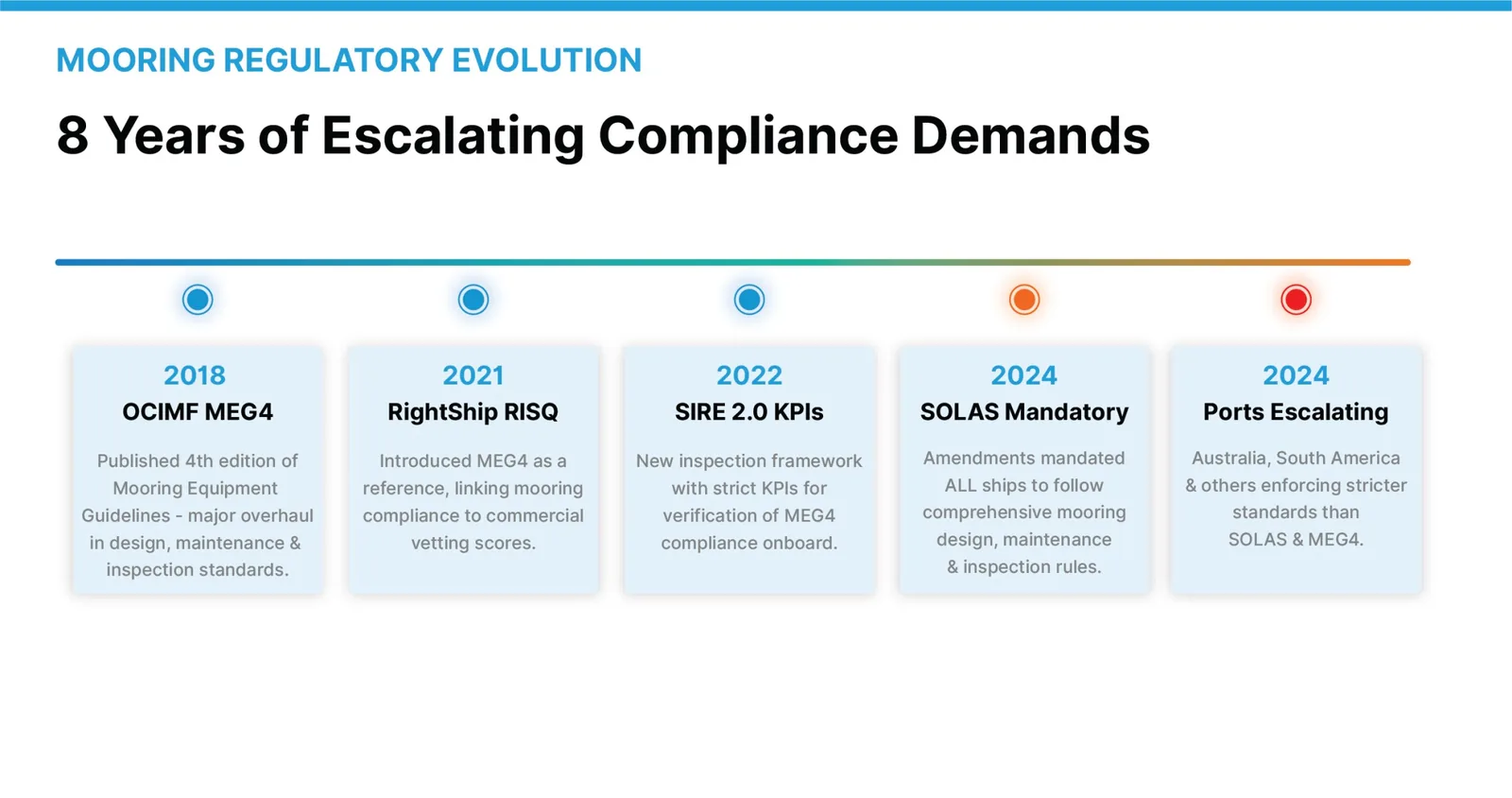
The regulatory trajectory is clear: mooring compliance expectations will only continue to escalate.
AND YET – MOST FLEETS ARE STILL MANAGING MOORING LIKE IT'S 2015.
This is the part that concerns me the most.
Despite everything that's changed on the regulatory side, the operational reality on most vessels I've seen looks something like this:
→ MSMP and Line Management Plans exist as hard copies - inconsistent across the fleet, rarely harmonised
→ Line lifecycle records are maintained in bulky Excel spreadsheets with manual entries
→ Compliance management is left to the crew - who often have limited subject matter expertise on MEG4 specifics
→ Rope procurement is decentralised, with limited understanding of which manufacturer or type is best suited
→ Maintenance follows generic schedules rather than vessel-specific or maker-specific regimes
→ Port-specific mooring requirements? Crews are expected to remember them from experience
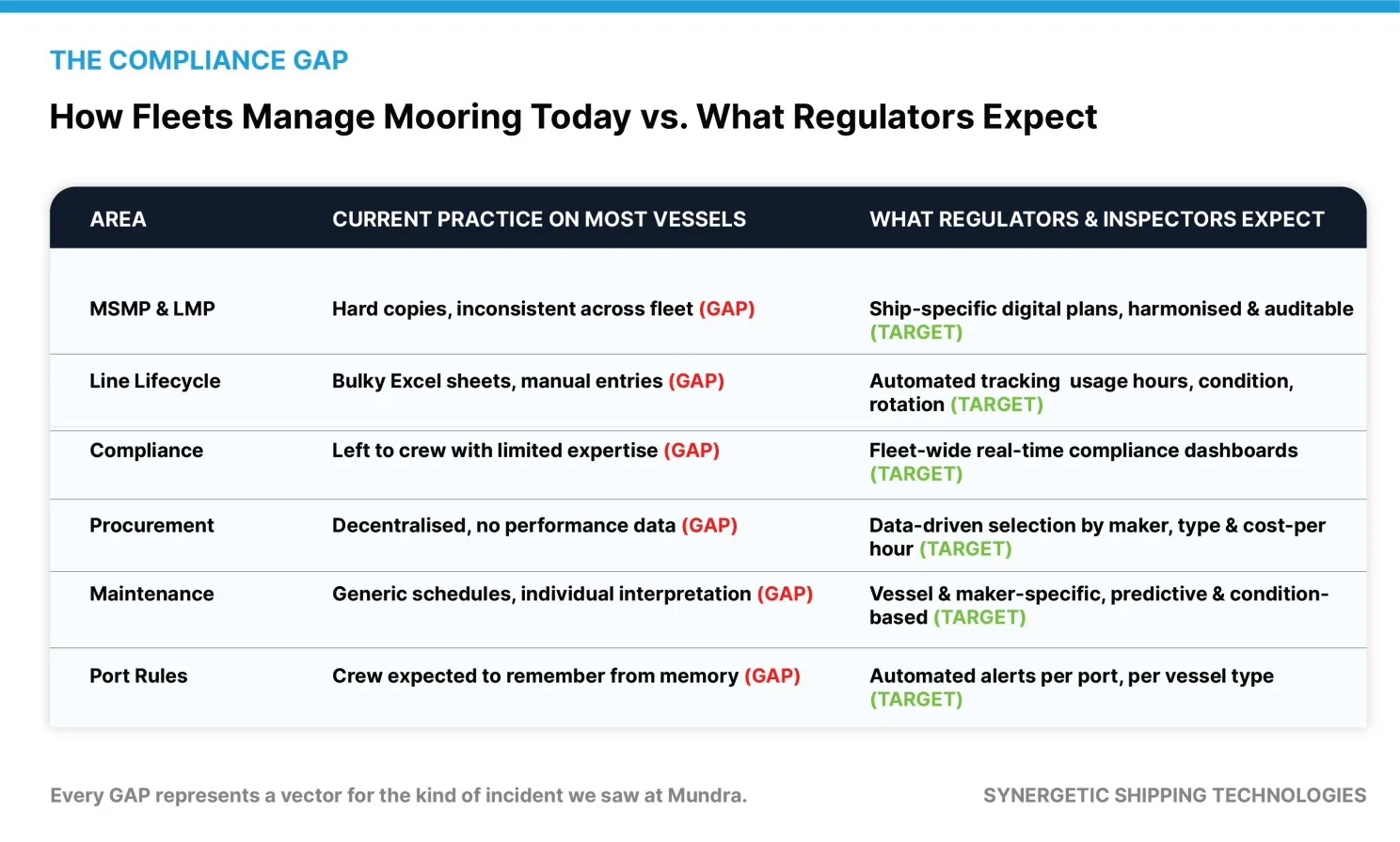
Every single one of those gaps is a failure vector. And when multiple gaps exist simultaneously - which they do on most vessels - you get compounding risk.
This recent breakaway didn't happen because of one thing going wrong. Breakaway events rarely do. They happen when the system of safeguards has enough holes that a trigger event (in this case, a thunderstorm) can cascade through all of them.
THE NUMBERS WE DON'T TALK ABOUT ENOUGH
Mooring incidents don't get the headlines that groundings or collisions do. But their frequency and severity are significant.
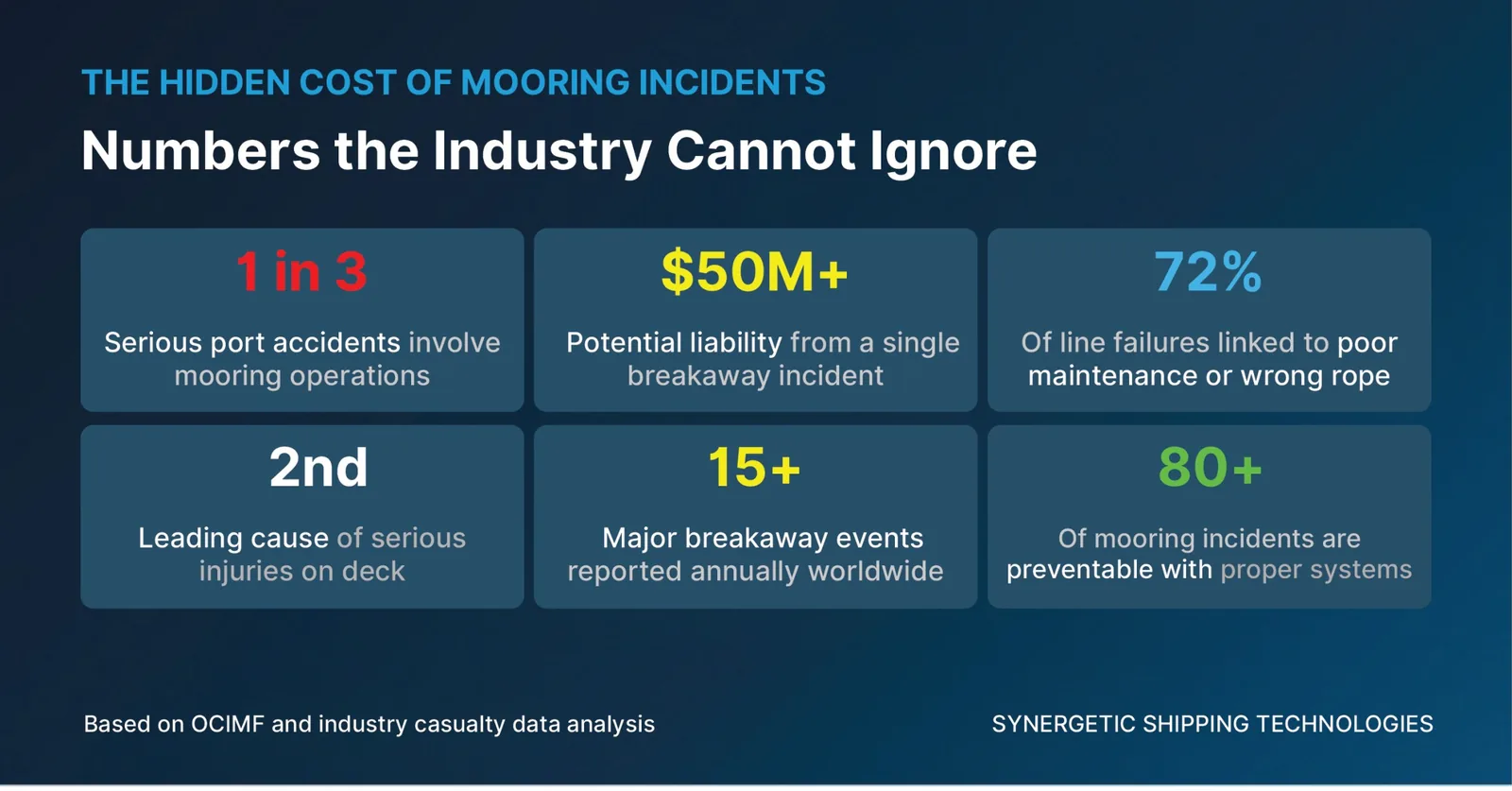
What strikes me most is that last number - 80% preventable. We're not dealing with acts of God here. We're dealing with gaps in systems, data, and management practices that are well within our control to fix.
FROM REACTIVE TO PROACTIVE: WHAT NEEDS TO CHANGE
Having worked with over 1,500 vessels on mooring compliance - through gap analyses, SDMBL calculations, engineering assessments, and digital mooring management - I've seen firsthand what the difference looks like between a reactive approach and a data-driven one. The results are not subtle.
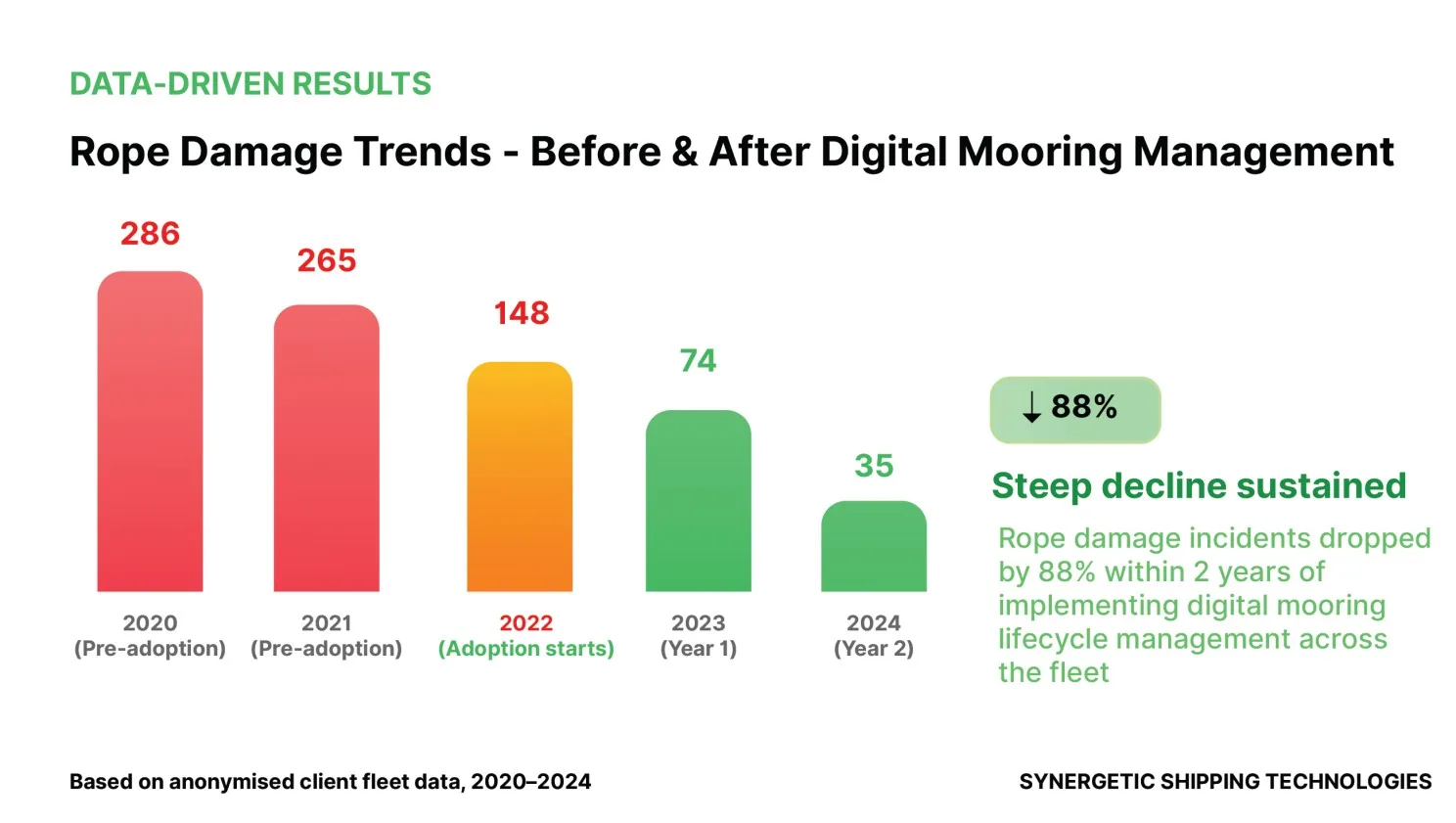
When you move from manual spreadsheets to systematic lifecycle tracking - when compliance alerts are automated rather than relying on human memory - when procurement decisions are backed by data on rope performance, cost-per-hour, and service life rather than price alone - the outcomes speak for themselves.
This isn't theoretical. This is what we see in the data across our client fleet every single day.
The approach that works follows three steps:
- Analyse the gaps - Not just regulatory documentation, but the actual design basis of the vessel's mooring system. Ship Design MBL, fittings SWL, line compliance, MSMP and LMP adequacy, company procedures.
- Mitigate the risks - Whether that means recalculating SDMBL, re-drafting ship-specific plans, conducting mooring engineering assessments, or upgrading inspection regimes.
- Monitor continuously - This is where most companies stop. Getting compliant is one thing. Remaining compliant - with automated alerts, real-time fleet dashboards, and data that proves your systems are working when the auditor or inspector arr ives - is another entirely.
At Synergetic Shipping Technologies, this three-step approach is at the core of everything we do. Our DigiMoor X7 platform - approved by ClassNK and recognised by RightShip as a Zero Harm partner with a dedicated Mooring Safety badge - was built specifically to close this loop from gap analysis through to continuous, automated compliance monitoring.
But the technology is only half the story. What matters is the culture shift: treating mooring as a mission-critical system that deserves the same data-driven, proactive management attention we give to navigation, propulsion, and cargo.
THE BOTTOM LINE
This recent incident at a major Indian port is a reminder - not a surprise.
The regulatory framework has caught up. The technology to manage mooring systems properly exists and is proven. The data shows that digital mooring management works.
The only variable left is how quickly our industry chooses to adopt it.
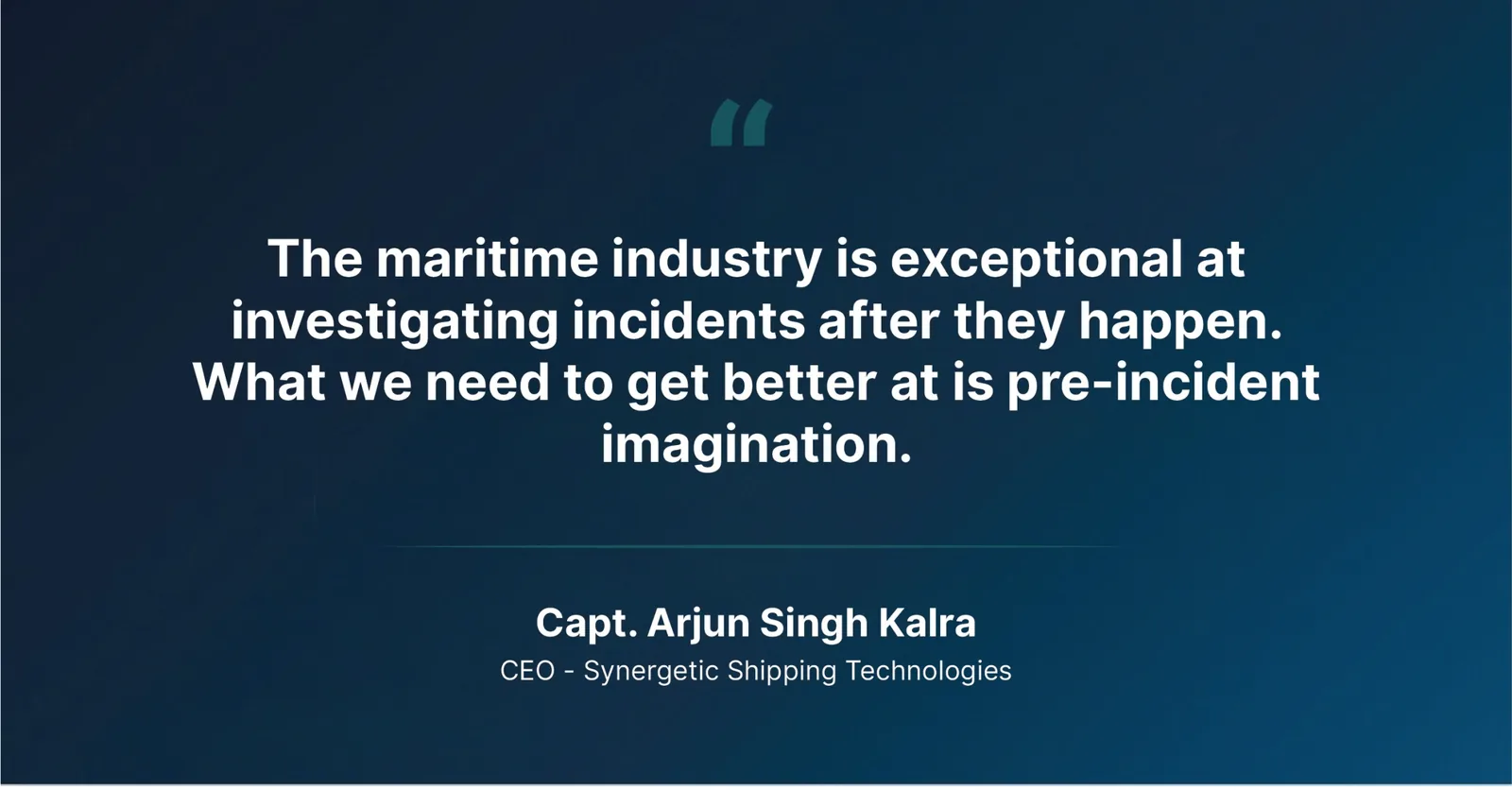
I'd genuinely like to hear from Marine Managers, DPAs, HSSEQ heads, and Marine Superintendents - how is your fleet managing mooring compliance today? Are you where you need to be?
Let's keep this conversation going. The stakes are too high for silence.